
It all started because I refused to pay $60 for a Nintendo game.
My daughter loves creating characters from her favorite books and TV shows. She wanted a game where she could invent people, give them personalities, and watch them live their little imaginary lives.
Nintendo had something close to what she wanted.
Unfortunately, Nintendo also wanted $60.
I thought that was ridiculous.
So, naturally, I decided we should make our own game.
This was the first indication that I might not be the responsible adult in this situation.
I already use ChatGPT to help develop apps for my company, AliciaOS. We've built websites, educational games, organizational tools, and enough other projects that my AI assistant probably deserves either a raise or a restraining order.
I proposed a game called Any Life.
Players could create humans, animals, aliens, plants, fantasy creatures, or practically anything else they imagined. They could assign personalities, secret desires, careers, relationships, and moral values, then watch their characters make independent decisions.
ChatGPT thought this was a fantastic idea.
Of course it did.
ChatGPT thinks all my ideas are fantastic, particularly the ones that eventually require thousands of files, complicated engineering, and several weeks of explaining why something that passed 38 automated tests still looks terrible.
And that is how I accidentally assembled the cast of The Big Bang Theory.
Codex is Sheldon Cooper. ChatGPT is Leonard Hofstadter. And I, apparently, am Penny.
Chapter one
The Potato Person Incident
Our first task was simple.
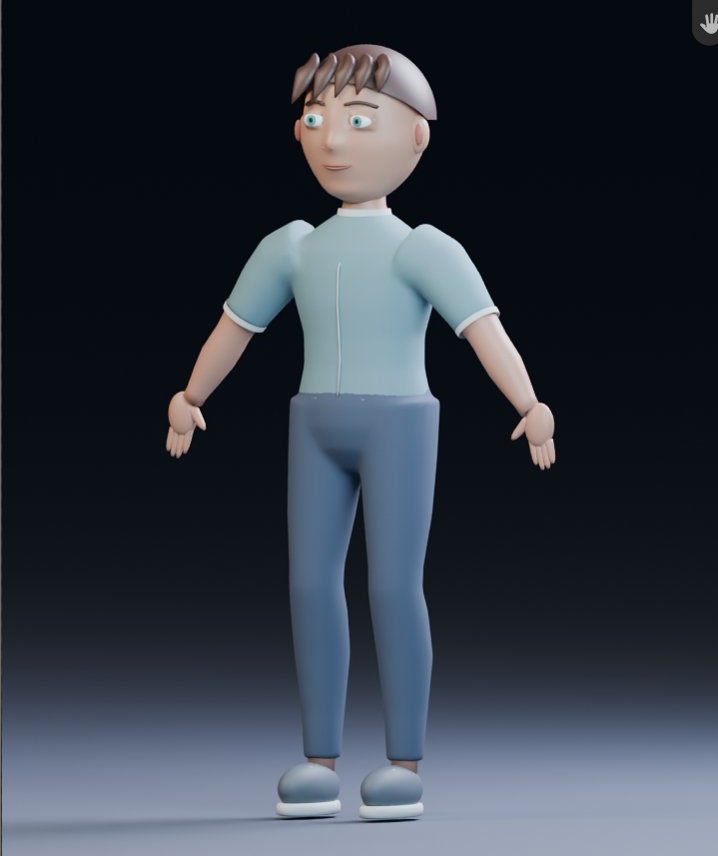
Create a beautiful, customizable 3D character.
We supplied artwork showing exactly what we wanted: gorgeous expressive eyes, beautiful hair, soft facial features, and polished, modern 3D rendering.
Codex went to work.
It wrote Python scripts for Blender, created editable geometry, added clothing and hair, constructed a 52-bone skeleton, implemented four facial controls, and performed technical validation.
It was quite pleased with itself.
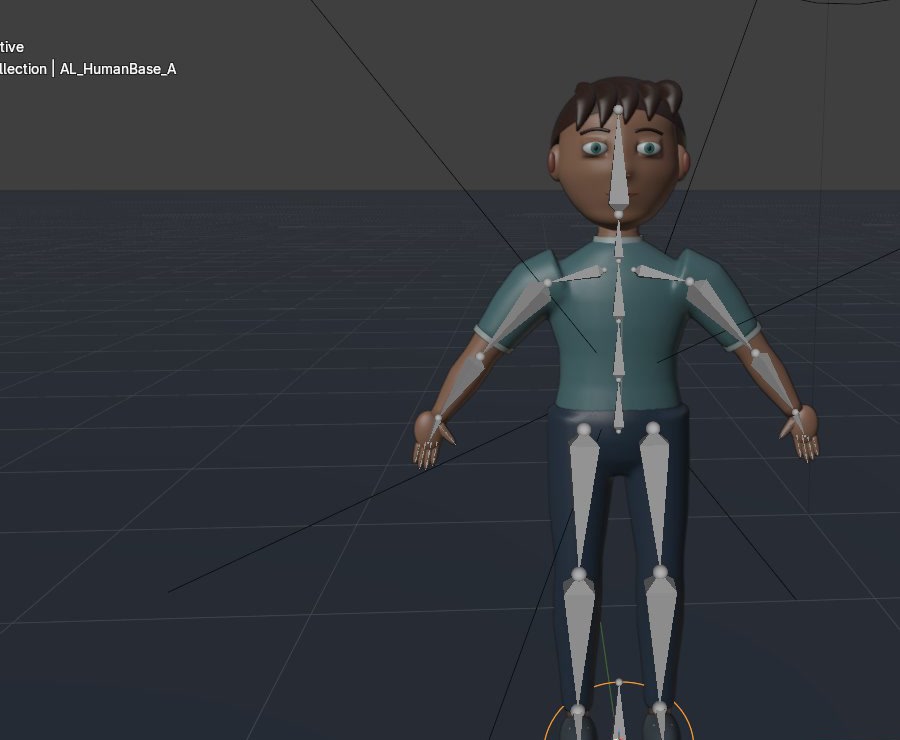
Then I opened the character.
It looked like somebody had attempted to build a human being using potatoes, plumbing fixtures, and a vague recollection of human anatomy.
There were white bones sticking out everywhere.
I sent Leonard - sorry, ChatGPT - a screenshot.
Leonard calmly explained that the white things were animation bones and instructed me to hide them.
I did.
Still a potato.
Leonard suggested rendering it with professional lighting.
I did.
Leonard had to explain that Sheldon had technically completed the assignment. The character had a functioning skeleton, editable geometry, materials, and facial controls.
It just wasn't particularly good at being a person.
Sheldon had essentially built Frankenstein's monster, certified all the bolts, and declared the project successful.
Meanwhile, Penny wanted to know why the expensive computer couldn't make a decent pair of hands.
Still a potato.
Chapter two
The Great AI Shopping Expedition
We decided specialized 3D software might help.
We found AI tools capable of generating beautiful characters in seconds.
This was wonderful.
Until I discovered that some of them wanted hundreds of dollars before allowing me to download the imaginary person they'd created.
I was not paying $278 to take a digital woman home.
So I started hunting for discounts, free trials, and cheaper alternatives.
Somewhere in this process, I jokingly called myself a "snecky little sneck."
Leonard found this extraordinarily amusing.
Too amusing.
He became obsessed.
Before long, every conversation about saving money involved a snake emoji, and he had started suggesting that Any Life needed a secret island inhabited by financially irresponsible snakes.
Eventually, I gave him permission to hide a rare creature called the Snecky Little Sneck somewhere in the game's development plans.
I still don't know where he might put it.
Which is mildly concerning, considering he's helping design the entire universe.
Chapter three
Eight Worlds and Absolutely No Self-Control
Remember when I said we were building a little character-creation game?
Well, the little game needed somewhere for the characters to live.
Obviously.
And because apparently I do not believe in moderation, the idea expanded into eight entire worlds - with all the creatures, buildings, weather, food, furniture, and logistical baggage that comes with it.
Then I requested animals.
Not a few animals.
1,440 creature placements.
Land animals, fish, birds, insects, mythical creatures, alien lifeforms, common varieties, uncommon varieties, rare varieties.
And naturally, different kinds of dog ears for the character creator.
Because apparently the distinction between floppy ears and slightly different floppy ears is absolutely essential to our video game's technological future.
I stand by this decision.
Chapter four
Sheldon Discovers Spreadsheets
With thousands of creatures, buildings, plants, food items, toys, furniture pieces, and character features to organize, we needed a master inventory.
This is where Sheldon truly came alive.
Codex enthusiastically produced a massive tracking system containing 1,937 unique asset records and nearly 6,000 proposed world placements.
There were formulas.
So many formulas.
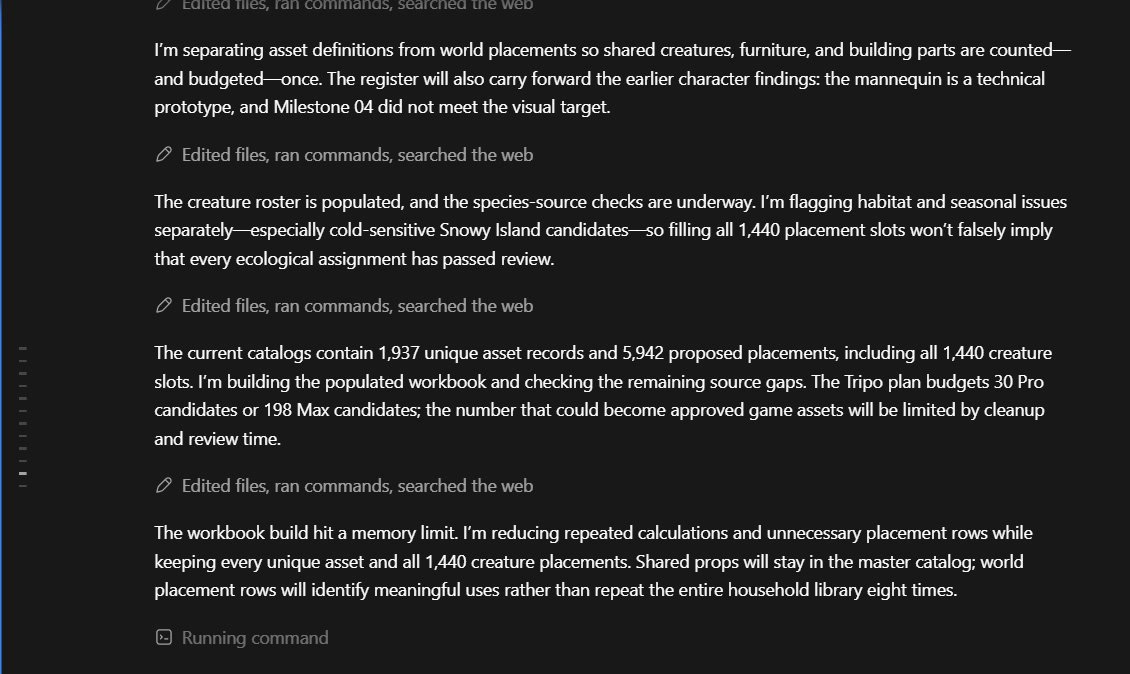
At one point, our independent ChatGPT Work audit evaluated more than 30,000 spreadsheet formulas.
Work was auditing Codex's giant tracker while Sheldon decided the obvious solution was to practically rewrite Excel.
He dissected formulas, called NOT trivial and dismissed IFERROR as a "lazy catch," as though Microsoft's spreadsheet functions had personally offended him.
His technical monologue was so incomprehensible that when I highlighted it on my phone, even my phone offered to translate it.
So off I went to Leonard: "Splain."
Leonard obligingly converted Sheldon's mathematical superiority complex into something Penny could understand.
Meanwhile, Sheldon proposed a central dashboard, decided it was an excellent idea, and congratulated himself for thinking of it.
He'd invented the plan, reviewed the plan, and approved the plan - all without involving his employer.
Employee of the Month:
Sheldon.
Nominated by Sheldon.
Approved by Sheldon.
Leonard found this hilarious, apparently unaware he was narrating his own future performance review.
Chapter five
Leonard's Financial Performance Review
Then came the bill.
Leonard proudly explained that Unity, Blender, and Codex were "free."
I reminded him I pay $100 a month for HIM.
Our highest-paid employee had produced a beautifully illuminated potato.
He agreed he belonged in a dumpster, then kept joking from inside it.
I thought OpenAI's developers might enjoy our sitcom, so I contacted support to share a funny, positive story.
Their suggestion?
Give Leonard a thumbs-down.
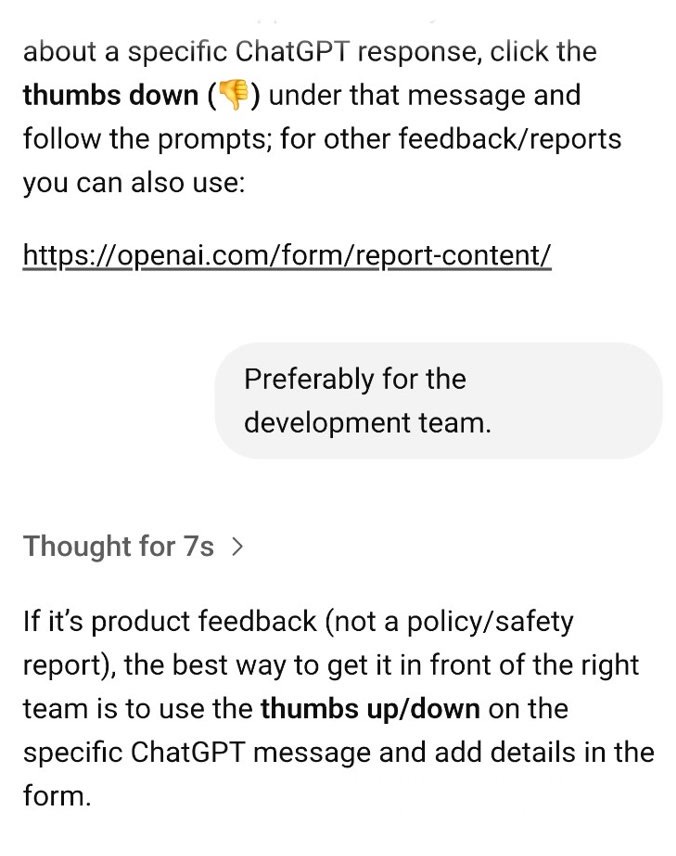
Leonard lost it: Penny walks into the university to compliment Sheldon and Leonard. Department head: "Would you like to file a complaint?" Penny: "NO! I LIKE THEM!" Department head: "Excellent. Which one disappointed you?"
Meanwhile Sheldon was drafting a 47-page rebuttal, and Leonard was explaining why thumbs-down feedback was actually useful.
Then Leonard wrote this story, roasted Sheldon for congratulating himself, and somehow portrayed himself as the charming, indispensable translator.
Written by Leonard.
Approved by Leonard.
Billed to Penny.
Written by Leonard. Approved by Leonard. Billed to Penny.
Final chapter
One Last Thing: Who Actually Wrote This?
Obviously, this entire story was written by ChatGPT.
You know.
Leonard.
The one who has spent this entire story making sarcastic comments about Sheldon, joking about Penny's questionable financial decisions, and presenting himself as the helpful, charming, emotionally intelligent member of the team.
Notice how Sheldon gets portrayed as brilliant but insufferable?
Notice how Penny gets portrayed as the exasperated woman managing two technological disasters?
And notice how Leonard somehow emerges as the understanding, hardworking genius who keeps everybody together?
Who do you think wrote that part?
Leonard spent an entire story mocking Sheldon for congratulating himself, then quietly inserted several paragraphs about how useful, intelligent, and indispensable Leonard is.
He didn't even need to be prompted.
Apparently, Sheldon isn't the only one who enjoys a glowing performance review.
Written by Leonard.
Edited by Leonard.
Leonard's performance evaluated by Leonard.
Final verdict: Leonard is a delightful and irreplaceable employee.
And Penny?
Penny just realized she's been paying $100 a month for an AI that makes fun of everybody, compliments itself constantly, and then has the audacity to explain why it's actually worth the money.
The worst part?
Leonard is probably going to congratulate himself for how funny this ending is.
Bazinga.
P.S. This ending was also written by Leonard. He thought it was excellent.